Koyaanisqatsi is a Native American word, which means world out of sync, out of balance. It would seem an apt term for the state of capitalism, particularly the energy market, in Britain when former Conservative Prime Minister, Sir John Major, suggests windfall taxing the energy companies and using the money to help the poor with their bills.
Although Major as PM expressed his desire for, "a nation at ease with itself"the policies of his Government (1990-7) did little to heal the deep social divisions caused by unyielding Thatcherism. He may have held a vision of England of old ladies cycling to church, village cricket and friendly dark-beamed pubs selling warm brown beer. But during his tenure, the unfettered banking sector thrived as many areas saw major industries exterminated while social housing stock withered. He was never a proper 'One Nation' Tory neither did his contempt for Labour politics diminish after office. So it is all the more surprising that he is indicating a redistributive method to solve the issue of "excess" profits of energy companies.
There were many personal flaws of Major's leadership qualities which resulted in the slow strangulation of his administration but being privileged and remote wasn't ever one of them. Major grew up in Brixton in the 50s in abject poverty and despite their respective faults both his predecessors, Heath and Thatcher, rose from very modest backgrounds and understood from an early age the pressures of tight family budgets.
It is impossible to say exactly why Cameron resists every call to tell any industry that their super profits are "unjustified" but his class is under focus again. Norman Tebbitt put it succinctly on the traditional test of a leader's credibility: knowing the price of a pinta. "It's not so much that Cameron and [George] Osborne didn't know the price of milk, but that they didn't know emotionally that the price of milk was important to people," he said in a Guardian interview.
And the same could be said of energy bills. When the big six companies all announce rises around 10% almost every year, then to millions of consumer's the reaction is not simply tutting to themselves, "bloody typical". To many, up to their eyes in debt, there is an immediate mental calculation of what they will have to do without. John Major recognised that in all too many cases it means an inenviable choice between, "keeping warm and eating." These companies' culture of disposal labour and corporate dominance make it possible that an employee can be given a powerpoint presentation in his hospital bed just five days after a heart attack and given his cards in front of the rest of the ward.
It is a perception problem 'for-whose-side-are-you-on' not just for the front bench but also the party. Gove showed his callousness for people reduced to relying on foodbanks by saying they were for thoe who did not have the skills to manage their money. Last week, the unsinkable Dennis Skinner was shouted down by Tory backbenchers as he relayed the pathetic tale of constituent David Coupe reduced to abject poverty by an Atos assessment. He died of cancer waiting for his appeal against loss of benefits after being deemed fit for work. The circumstances were bad enough but to be berated by the Government side showed them either lacking any self-awareness or compassion.
Ed Milliband's masterstroke in pledging a freeze on energy bills for 20 months has left Cameron in a blue funk. At PMQs, he wailed Ed was a "conman" and was slapped down by the Speaker for questioning his honesty. He then chucked his green credentials in the bin to shave a couple of quid of some bills and destabilise the Coalition further. He even used some useless adviser's suggestion to try and turn the blame of Millband for what he did as Energy Secretary five years ago. Even the Telegraph called it a "dreadful performance."
The economy went into steep decline following the banks' crash: Cameron had the opportunity to ensure the sectors responsible paid their fair share and that cartels and monopolies were not allowed to succeed. His instinct is clearly against that and he claims the economic crisis was simply "Labour overspending". The economy is out of balance, and hard-pressed families are feeling deep stress about the unaffordable contribution they have to make. Cameron is not the man to re-adjust it because he has no idea what those pressures feel like. I mean, what's the problem?
Thursday, 24 October 2013

Friday, 4 October 2013
She's the Model
If you absorbed all you knew about Germany and its people from the British press then “relaxed” and “charming” would be very low on the list of likely adjectives. Yet this was the unanimous view of a group of us who visited Berlin last weekend. An immensely welcoming city identified by mutual respect and social tolerance.
The general election had been held the previous weekend and delivered another term of coalition Government for Chancellor Angela ‘Angie’ Merkel (pictured). The campaign was not, like UK, characterised by rancorous arguments and wholesale misrepresentation of policies, like we witnessed during the recent Conference season. The main parties in Germany argued over the practicalities of strengthening the economy. The basis of German industry and public services is co-operation between unions and bosses. The idea of a Secretary of State for Education describing teachers as ‘militants’ like Gove did this week, would be treated with the ridicule it deserves.
It appears to me that the Germans are simply more grown up than us, more unafraid of presenting themselves as an intelligent, self-aware, discerning people. The UK appears to be increasingly suffering the cultural cringe, which we used to mock Australians for.
Over the weekend, I also found it easy to deny myself the sometimes dubious pleasure of British newspapers for a few days. It was hugely dispiriting to read on the plane home the reprehensible and boorish articles by the Daily Mail about the Labour leader’s, Ed Milliband’s late father, Ralph. It was clear to me that it was not the realm of opinionated journalism but blatant propaganda.
The headline sought to establish a slogan that Ralph was a man “who hated Britain.” Not only was it a weak and personal attack on the integrity of the Milliband family but also contrary to the record of history which clearly shows Ralph raced to join the Royal Navy, served with distinction for three years and lived an exemplary peaceful life as an academic and family man.
But he was also a life-long socialist. The Mail’s editor, Paul Dacre, saw an infantile opportunity to attempt to portray Ed as a Communist himself with a hidden agenda. Dacre clearly views his readership as so gullible and malleable that they might be persuaded by that clearly preposterous assertion. But it is not as if the readers would be toying with the idea of voting Labour in any event. Ed’s deviousness, would, according to the Mail, include stifling press freedom. This entire pointless melodrama has so obviously been contrived to falsely show Ed as wishing to control the press ahead of the imminent Parliamentary decision on Leveson.
In a truly bizarre and trenchant editorial on Tuesday, Dacre accused the Leader of the Opposition of having, “driven a hammer and sickle through the heart of the nation so many of us genuinely love.” It sounded like someone who was both very angry and drunk. Alistair Campbell captured the Mail most succinctly as having, “the worst of British values posing as the best.”
It is doubtful whether this newspaper would sell much in Germany. People would be surprised and dismayed to read the recurrent themes of Communist/Fascist conflict. Younger generations have put that behind them and the country thrives because it has a confident, outward looking aspect. While we in Britain have come expect, since Thatcher’s days of social division, that politics and media should be spiteful and wantonly divisive, Germany has quietly built a balanced society and from their derives its integrity and dignity as a nation.
Saturday, 24 August 2013
Cost of Freedom
 The revelation that DPM, Nick Clegg, approved the pointless destruction of a number of the Guardian’s hard drives shows how confused liberals have become over state security. For a life long advocate of civil liberties to endorse intrusion into a newspaper’s officers by MI6 to suppress the news of widespread illegal spying by US and UK agencies, is perhaps Clegg’s most hypocritical stance yet.
But the Conservative Right on either side of the Atlantic, is no less contradictory. For too many years they have adhered religiously to the Bush/Cheney philosophy of fighting terrorism should supersede individual freedoms for the sake of domestic security.
The Edward Snowden revelations make them condemn the man not the outrageous disregard for privacy, by NSA and GCHQ, they have exposed. Placing security over rights to liberty, should only really apply when there is a clear and present danger and not for all time.
Some commentators and politicians have been citing incidents in Yemen and closing embassies as justifications for NSA’s intrusion into US citizens emails and phone calls. But this was all carried out in secret. These voices were not calling for enhanced powers against the public prior to the news that it was going on anyway.
In the UK, we have some safeguards through ECHR but rely heavily on a British ‘sense of fair play’, which is hardly bulletproof. Much depends on the liberal instincts of the Home Secretary and PM who invariably have been scared witless by spooks’ secrets and are pliable to almost any infringement of civil rights in the name of security from terrorism. If that means agreeing to detain, threaten and confiscate the possessions of a journalist’s partner at a UK airport under terrorism legislation, then so be it.
In the US, there is of course the Constitution. And although many Conservatives have got themselves in a blue funk about public protection, the document will always remain the cornerstone of US law. In the UK, all we have, in finding the right balance on freedom and security, is the fallibility of the Home Secretary and political weakness of the Prime Minister.
The Home Sec was wrong to say she has no ability to question the operations of police and security services. It is the Home Office which makes the law so has an interest in how it is applied, in the case of David Miranda, wrongly. The Terrorism Act 2000 applies to “someone involved in committing preparing or instigating acts of terrorism.” It is simply not acceptable, nor legally sound, to broaden its scope to include holding information for publication which could, in the opinion of MI6, potentially be of use to terrorists.
The only people who are not confused are the top rank civil servants and senior spooks who are clear freedom of press and individual liberty is expendable when covering up illegal phone-tapping and intervention on emails. Every party appears to have their own version of patriotism. But the patriotism which upholds civil liberties first appears, since 9/11, to be denigrated by those who fear terrorism more. In fact they would, like the Home Office, advocate that questioning the legal excesses of the police amounts to "condoning" terrorism itself.
Sunday, 28 July 2013
A Tangled Web

Last summer, the Olympics were an almost embarrassing success and in the last few weeks there have been famous wins for the Lions Rugby team, in the Tour de France and the Ashes.
But football is still there, lurking like some deviant, drunken, cash rich, cousin who is certain to upset the party in some way. While the other sports thrive on sportsmanship and fair play, the essence of football appears to be to deceive, lie, corrupt or actually cheat. The influence of money in the game is all pervasive and infects even the most routine routine judgements. Club football towers over international competitions.
There is no better example of the game's moral descent than the petulant and self-obsessed talent of Liverpool striker, Luis Suarez, currently earning £6m p.a. We first learned of him when his deliberate goal-line handball for Uruguay kept Ghana from making the World Cup semi-final. He did not regret his action and say it was all 'heat of the moment'. He said his red card was, "worth it" and mocked his opponents, as he made, "the save of the tournament."In the last ten minutes of any match, which Liverpool are not winning, Suarez can be seen throwing himself into the penalty box like a spiteful adolescent. He is currently serving a second ban for biting an opponent and was also banned for racially abusing Manchester United's Patrice Evra.
The once mighty club of Liverpool, in following purely commercial interests, has degraded themselves and been transformed from a club that neutrals would respect for their integrity, into the worst example of moral expediency in sport. Unless you count Leeds United.
The West Yorkshire club's steep decline into the lower leagues was deeply disturbing for the fans of the club - they were paying for a recession which was not of their own making. A succession of self-interested 'saviours' of Leeds threatened its demise. The lowest point was probably when, former Chelsea chairman Ken Bates (pictured), took over and installed the woeful Dennis Wise as manager. The club spiralled down even being deducted a total of 25 points for its poor administration. One match was delayed because the fans had to pay cash as the club had no card-paying facilities.
Bates's regime has been synonymous with opaque business deals - for some while no-one knew who owned the club which did not prompt the FA to ensure it was a, "fit and proper person". In modern football the administrators yield meekly to the strong arm of commercial pressure.
Bates banned the Guardian and the local BBC from press conferences at Elland Road for asking questions about how the club was run. He called the fans "morons" and defamed the former club director Melvyn Levi in his programme 'notes' over several months. And he sold many of the best players, usually for an undisclosed fee.
His status as a Monaco resident for tax reasons has finally precipitated his very welcome exit from the club. The new owners, GFH Capital, allowed Bates to stay in the titular, self aggrandised
role as club "president" but baulked at his expectation that the club would pay £500k to the costs of his private jet between Leeds and the South of France. Bates said, "I did it in the best interests of the club."
Although Leeds fans still have to contend with the unfettered ravages of capitalism which means they can never compete at the same level they used to, at least they no longer have a Chairman who treated them and the club with such contempt. However the sport proudly holds itself in disrepute.
Tuesday, 25 June 2013
Behind the Curtain

The colossal scale of internet and phone interception, mainly against unknown targets, carried out by the NSA in the US and our very own GCHQ provoked screaming headlines around the world. But the secret attempts to smear the Lawrence family by undercover Met police hit home more directly.
Neville (pictured) and Doreen Lawrence lost their son, Stephen, to a racist gang of thugs and were consistently denied justice by a police force shown to be institutionally racist. It was hard to say at the time, in 1999, when the Macpherson report was published. The senior cops, far removed from the canteen culture and Policeman's Balls accepted some managerial repositioning on diversity but resisted Home Sec Jack Straw's bolder statements on change to rank and file attitudes.
We already know there was barely any enthusiasm for finding evidence in the Lawrence murder case and the assailants seemingly became immune to prosecution. What we didn't know, until now, was there were, simultaneously, mighty efforts made to dig dirt on the family and monitor all their friends and house visitors by the Met Police's Special Demonstration Squad. They even corrupted the trust between the Lawrences and Family Liaison Officers. The stated justification of preventing public disorder has been used by tyrannical regimes for decades.
It would appear that Jack Straw was deceived throughout by a Special Branch campaign, presumably through the friendly tabloids, to destroy the Lawrence's family name by formulating false links to criminality. Straw, said yesterday, the secret operation was, "a perversion of police resources, priorities and principles." Duwayne Brookes, Stephen's best mate, now a Councillor was set up on a charge of criminal damage. He was well used to this hostile treatment having been falsely accused of two petty crimes carried out within Eltham police station on the night of Stephen's murder.
Neville Lawrence said the family's decisions throughout was to, "use the courts". It is the ultimate irony that it was the police, the upholders of the law, who were pursuing an obsession to taint the Lawrences as criminally dubious while the family themselves maintained their faith in a corrupt Criminal Justice System.
We have already learned of the revelations of undercover police forming long-term relationships, fathering children and using dead children's identities. There will be more to come: there were about 130 officers leading double lives to trap families and protestors into criminal charges for what appears to be political motives against liberals, environmentalists, campaigners and civil rights activists. This operation amounts to an assault on democracy.
As Straw has said, the critical question is, "how high up" the knowledge and authorisation went. An investigation chaired by a judge would struggle to uncover these deep layers of official deceit. The offer of the current Home Sec to leave it to other police and one barrister to determine the truth is derisory. Small wonder Neville Lawrence has dismised this offer out of hand as "unacceptable". The police have not even felt it necessary to apologise to the women whose lives have been ripped apart by this serial undercover operation when they fell into relationships with spying officers and so could not have given "informed consent".
Chief Constable Mick Creedon, Head of Operation Herne, which will not report until at least 2016, hardly fulfills our confidence by his blase attitude to human dignity and happiness. In an inteview with the Guardian, he said he did not feel like exposing the whole scale of surveillance and duplicity: "'The way the world is now, that will fizz around the internet networks instantly,' he said, adding that he saw little benefit in "raking up" the issue with parents who would otherwise remain oblivious."
Creedon already appears to be unable to seek the transparency which would properly expose these outrageous actions and we will be waiting years in any case. Few could seriously expect one of their own to bring down a fellow senior officer. I mean, when did that last happen? The precedents are not all inspiring.
Monday, 20 May 2013
Loony Tunes
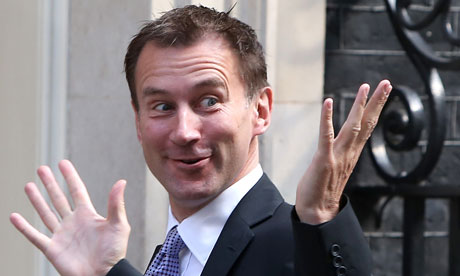
He probably believed it when he said it was the Labour Party who had the real problem. He probably even believes in all that guff about the "global race" and how a pointless legal change about an in/out referendum will be an expression of the will of the people.
With all this posturing he is convincing no-one. But that is the style of this Government, it has never felt like persuasion, getting down and dirty, was necessary. It has felt leadership commands deference from the public and its core supporters. To call them "mad, swivel eyed loons" captures the gap between the ground troops and the officer's mess rather well. If anyone of Thatcher, Heath or Major's administration had so insulted the activists pounding the streets, he would have been sacked on the spot. All that is denied but even if Feldman did say it, Cameron would feel frankly, you know, sort of rather embarrassed to give a chap his marching orders when they are all such good chums going way back.
The disunity within the party is virulent and worsening, any damn fool can see that. The reasonable voices are being drowned out by the whack jobs. Geoffrey Howe's bit in the Observer was a throw back to how a politician used to write articles, unafraid of writing intelligently, with full historical context. The other side are not listening: they are imbued with purpose derived from their political momentum. They appear to have forgotten disunity plays very badly with the public who rate the EU about 10th on their priorities well behind, jobs, growth and living standards.
At least when John Major went to war with his "bastards" it was a simple argument to follow. The Maastrict Treaty brought us a little closer to EU politically - they hated that. Cameron's position cannot be summarised in less than about 1,000 words and is so full of twist and turns, humiliating contradictions and bare-faced hypocrisy.
But suffice it to say, a vote on a referendum will not be passed in the Commons, if it did it would not bind the next Parliament, if Cons won the election (ha!) Cameron would vote to stay in. Also the much repeated "renegotiation" with EU is doomed because any of the other 27 countries can veto any aspect of it and any concession granted will be judged by people like John Redwood and Peter Bone who won't be satisfied until the Channel Tunnel is dynamited.
Cameron is now like the prefect who everyone has discovered has a father "in trade". His authority is dwindling by the day, his Defence Secretary casually mentions he would support leaving the EU, gets a "now, look here" talking to, then the next day disavows the Government's policy on gay marriage.
Cameron's problem is that he expects people to follow by mere dint of him being leader. Now they are leading him into political oblivion.
Tuesday, 9 April 2013
Future Buried in the Past

Everyone is allowed to express a little
extra kindness to the recently departed. It is only a truism to say that
eulogies are not objective.
But the death today of (Lady) Margaret
Thatcher has prompted the most fawning statements from her political offspring
in the modern Conservative Party. Former Cabinet member, Lord (Ken) Baker said
when she left office, the UK was the strongest economy in Europe when clearly (West)
Germany had outperformed Britain since the late 1960s.
David Cameron went even
further by claiming, “she didn’t just lead the country…she saved it.” To be a
British saviour is a quality only really attributable to Churchill. Such prosaic tributes and nauseating hyperbole give a highly false impression of such a domineering figure in
Britain’s history.
Former London Mayor, Ken Livingstone, did not cow to the obsequious mood and said, “her
legacy was fundamentally wrong.” He pointed to the sale of council houses as
root cause of a chronic shortage of housing now. Her tax and industrial
policies created the underclass of benefit dependency and as a female
politician she did nothing for women’s rights whatsoever.
The Conservatives’ toadying tributes all point
to her political demise in 1990 as PM as being prompted by the introduction of
the iniquitous flat rate local ‘poll’ tax. One or two suggest she had gone too
far over her opposition to policies over the European Union. The truth is she
had lost her mental faculties to be able to carry out the onerous task of being
Prime Minister. Increasingly eccentric public performances in Parliament were
matched by delusional behaviour around the Cabinet table as chronicled by her
Deputy Geoffrey Howe when she sacked him in fit of pique.
Many of the political class who are
describing her as a great patriot are deeply selective of her version of it.
Certainly she, by her powerful political will, enabled the Falkland Islands to
be recaptured in 1982. But equally in her determination to break the National Union
of Mineworkers in the 1984-5 strike, she ensured the price the country paid was
the loss of energy self-sufficiency.
There are few political figures who have
attracted such adoration and opprobrium in equal measure. Former French
President Francois Mitterand captured both sides when he said, “ She has the
eyes of Caligula and the lips of Marilyn Monroe.” Dr
Jonathan Miller said, “ her odious suburban gentility and sentimental,
saccharine patriotism, cater to the worst elements of commuter idiocy.”
It is not altogether easy to find many of
Thatcher’s achievements made simply for the good of her fellow man. But she did
introduce harm reduction measures and needle exchanges to slow the spread of
HIV/AIDS in mid 80s. Her scientific background overcame what appeared to be a
highly toxic media issue at the time.
However her political philosophy was
heavily influenced by Neo-Conservatives Keith Joseph and the discredited Enoch
Powell. Her view that there was “no such thing as society,” will be her epitaph
– these words constitute a philosophical heartlessness based on economic
consumerism and acquisitiveness as the sole path to the nation’s happiness.
She detested her predecessor’s, Ted Heath,
“One Nation” approach and he hated her back. At a formal photograph of former
PMs, he was asked if he could stand further to the right of her, “Not sure
that’s actually possible,” he grumbled. Her unyielding support for Chilean
tyrant General Pinochet during his arrest in Britain in 1998 showed she was
morally fallible.
But her impact on the Conservative Party is
still immense. In the Shires of rural Britain, David Cameron is still compared highly
unfavourably to her 23 years after she was deselected by her backbenchers, as
were the other four party leaders in between.
In many ways Thatcher’s greatest mark has
been on her own party, the Conservative Party have only been victorious in one
election since she won easily in 1987. All subsequent leaders have been trying
to emulate her dominance and conviction but have simply come across as divisive.
That ultimately is Thatcher’s legacy: a
nation uneasy with itself and a party trying to recapture the elusive past.
Subscribe to:
Posts (Atom)

